
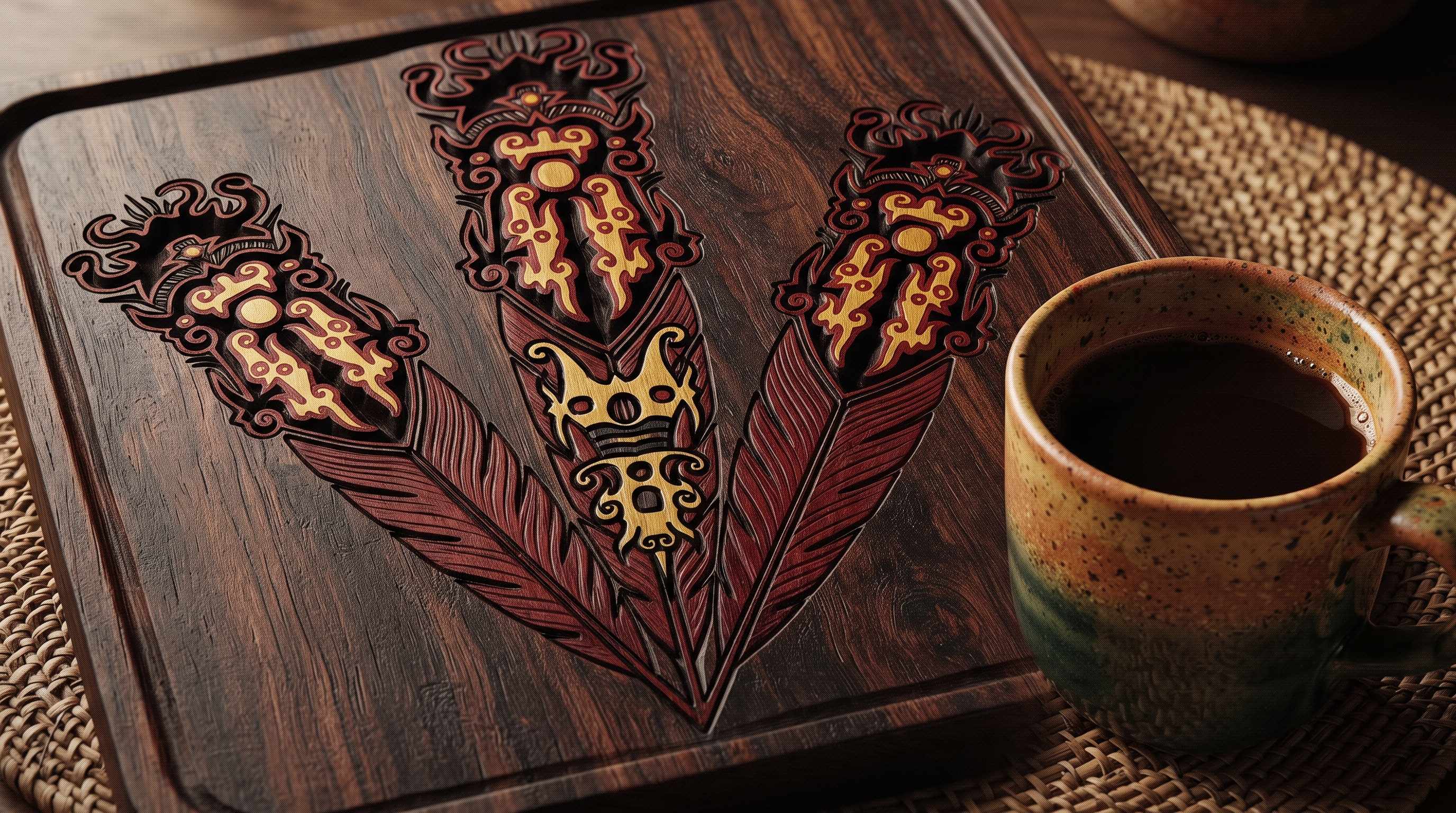
He didn’t know how to say “I love you” in words, so he carved a delicate hornbill motif into the handle of her favorite wooden coffee stirrer. This scene offers one of many creative writing prompts for romantic tension that rely only on touch, sound, smell, and taste.
The tip of the small blade met the ironwood and stopped. He pressed harder. The grain resisted, then yielded with a soft, dry rasp. A thin curl of wood lifted and broke free, settling against the side of his thumb. He turned the stirrer in his palm, feeling the first raised line of a wing take shape. Another careful scrape followed, the blade whispering along the curve. Fine dust clung to the pads of his fingers, dry and slightly resinous. He blew once; the dust lifted in a brief cloud that carried the sharp scent of freshly cut ironwood mixed with the deeper, earthy smell of the river bank outside. The air inside the stilt house already held the steam of boiling water, the faint char of sugar, and the damp green note of river fern.
He set the finished stirrer on the low teak table. The wood felt smooth now except where the carved feathers rose in shallow ridges. Across from him the ceramic mug settled with a clean, hard click against the tabletop. The sound cut through the steady midday hum of cicadas. He slid the stirrer toward her. The length of wood traveled across the grain with a soft sliding whisper. Her fingers met his knuckles. Skin brushed skin—hers dry and warm from the sun, slightly rough at the thumb pad where weaving needles had pressed day after day. The contact lasted only a moment before she lifted the stirrer.
She turned it slowly between her fingers. The raised ridges of the carved feathers pressed into the soft flesh of her fingertips, each tiny edge distinct. She dipped the tip into the dark coffee. The liquid closed around the wood with a quiet, liquid sound. She stirred in slow circles. The spoon-end met the bottom of the mug in a series of soft, regular taps. Steam rose, carrying the bitter aroma of robusta and the sweeter note of the sugar that had settled lower. She lifted the mug. Warm porcelain met her lower lip. She took a slow sip. Heat spread across her tongue, first sharp and bitter at the edges, then richer and slightly sweet where the grounds had rested. When she lowered the mug, the stirrer remained in her hand. She ran her thumb once more along the carved beak, feeling every contour, then guided the wood back across the table until it rested against his open palm.
He closed his fingers around it. The handle was damp now from the condensation that had gathered on her skin and from the steam that clung to the wood. The wet grain pressed cool and slightly sticky into the calluses of his hand. He did not move the stirrer away. For several breaths neither of them spoke. Outside, a gust of wind rattled the dried palm fronds on the roof in a sudden dry clatter. Inside, the air stayed still and heavy, thick with the taste of roasted coffee and the humid breath of the Kapuas that drifted through the open floorboards.
She reached again. Her fingers found the end of the stirrer while it still lay in his palm. The light pressure of her fingertips transmitted through the wood into his skin. She drew it back toward her, dipped it once more, and stirred. The soft tapping resumed. He listened to the rhythm and to the quieter sound of her breathing, steady and close. When she returned the stirrer the second time, her hand lingered a fraction longer against his. The shared warmth of the wood and the faint dampness of her skin remained after she withdrew.
They continued this way without words. Each time the stirrer crossed the table it carried a little more moisture, a little more of the coffee’s scent, a little more of the heat from one palm into the other. The cicadas kept their high drone. Somewhere below the house the river moved with a low, continuous murmur. The taste of the robusta stayed on both their tongues, bitter and lingering. The ironwood handle, now thoroughly warmed and marked by their alternating grips, rested finally between them on the teak surface, neither claimed nor abandoned.
The last of the steam faded. The mug had cooled enough that only a faint warmth still rose from its rim. He left his hand open on the table, the carved stirrer lying across the center of his palm. She did not take it again. The ridges of the hornbill feathers pressed quietly into his skin, a small, permanent shape held in the damp grain. Outside the palm fronds settled after the wind. Inside the stilt house the air remained close and still, filled with the fading scent of coffee, river fern, and freshly worked wood.
Grateful you came by.
Feel free to share this story with a friend who might like quiet tales from Borneo, or simply leave a note below.
alam Art artwork Awareness books borneo Culture Dayak digital art Drawing eduART english Experience fantasy fiction FictionStories Idea insect inspired Kabupaten kapuas Hulu Kapuas Hulu Kecamatan Seberuang Learning life musik dayak natural Nature nft nftart nftartwork nftcommunity nftsale putussibau ravencoin rvn rvnft Seberuang Sejiham Sejiram short story Situs Gereja Katolik Santo Fidelis Sejiram story weekend west kalimantan writing